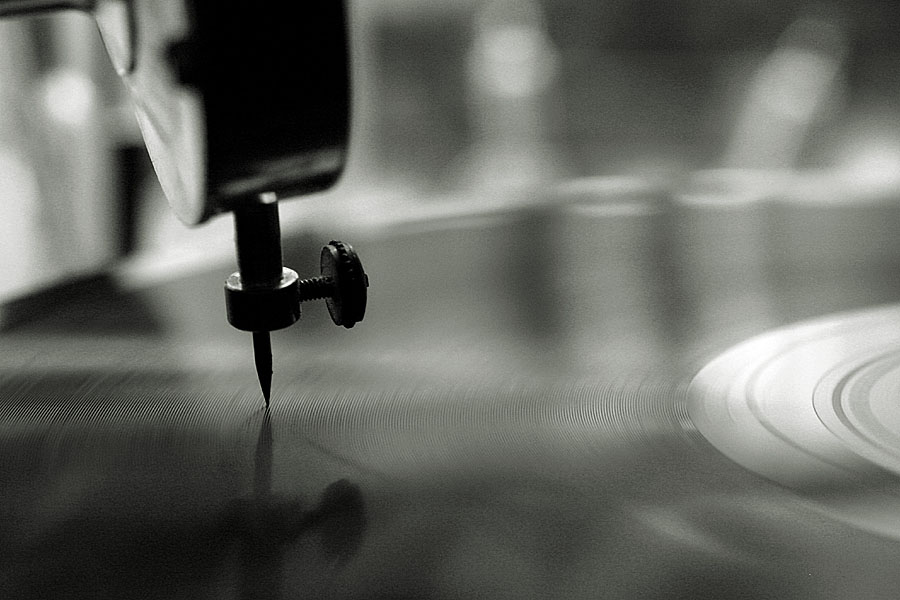
The Sweet Balance of Vinyl by ssilence on DeviantArt
B-Sides, deep cuts, and unreleased songs have always been desired by music fans.
People tend to think it’s annoying when someone likes a band’s less popular work. It seems pretentious to list your favorite song as an exclusive track on the Japanese release of a band’s fourth album (My personal favorite Muse song is exactly that, a track called “Glorious” off the Japanese edition of Black Holes and Revelations). Maybe they’re fans of the early sound, and so the deluxe edition bonus tracks off first album hits them in a way the follow-ups didn’t. Maybe the creativity displayed by the band on their less publicized releases is a little more special than what’s commercially viable.
Some bands have fans dedicated to their lesser-known work. In 2017, Muse performed at Shepherds Bush Empire, and the setlist was built by request. What followed was a performance of many of Muse’s deep cuts which they had not performed in many years, if ever. The Muse wiki has a detailed breakdown. Suffice to say that this Muse show is a good example of how there will usually be an audience that wants to see the songs that don’t exactly get the radio play.
Those B-Sides used to give us that extra little treat in our listening.
What is a B-Side?
In the vinyl era, there were three main types of releases. Long Plays or LPs were the large vinyl records, the albums. Think Pink Floyd’s The Dark Side of the Moon or Sgt. Pepper’s Lonely Hearts Club Band by The Beatles. These were cohesive experiences with the best of the best of a musical artist. They were, for the longest time, the baseline way to release music.
Smaller records with multiple songs were known as Extended Plays or EPs. An EP is more like a mini album. Often times it will have a few individual songs, or maybe it will contain material that was reworked in a new way from an album, or material left off an album entirely which was still considered worth releasing. Coldplay’s 2008 album, Viva la Vida or Death and All His Friends was followed up later in the year by Prospket’s March EP. In addition to containing some material not heard before, the eight-track long Prospekt’s March contained Viva la Vida’s opening instrumental as a longer song with lyrics, the track “Lost+” which is a version of “Lost” with a rap verse by Jay-Z, and a remix of the song “Lovers in Japan” in addition to four tracks recorded for the album which were left off.
Singles are exactly what’s on the tin. A smaller vinyl record, containing two sides, a single track on both sides. The A-Side was the main song being released, typically the most popular from the album and the one which got all the radio play. B-Sides typically contained one of those tracks which would show up on an EP, being a good song but not expected to get much radio play or being just off kilter enough to not make the album. As time marched forward, B-Sides were expected to become a thing of the past. Ironically, the opposite has happened thanks to changing technology altering what a B-Side means.
The LP and EP both remained virtually the same with dawn of CDs. The large physical size of the record was no longer the determining factor as to how much music could fit on a release. With the enhanced storage capability, singles shifted towards offering a couple of other songs that may not fit within the album despite their high quality or remixes of the main song, moving closer to EP territory. The term “B-Side” became a good shorthand for deep cuts in the age of CDs and beyond. These are songs that may appear on compilation albums, and the expanded re-releases of landmark albums that didn’t quite cut it for the initial commercial releases.
Because social media videos have a habit of adding music to them, audiences like to remix the tracks to better fit the videos they are creating. Often times these songs will have changed speed, added effects, or be a loop of an instrumental section. This has spurred many artists to use single releases to add these versions of songs, giving slowed, sped-up, and instrument versions an official release which will put money in the artist’s pocket for every stream. A lot of times, this means fewer deep cuts get released to the public.
Streaming services and digital delivery also offer the ability for music without physical releases to get into consumers’ hands. The Grateful Dead released two albums in 2020 to digital services to celebrate the 50th anniversaries of the two albums they released in 1970. The releases for both American Beauty and Workingman’s Dead were subtitled The Angel’s Share and released demoes, alternate takes, and early versions of many of the songs on both albums, giving fans an insight into the creative process without the overhead of physical media releases.
In this way, fans actually get more access to the unpopular music they so desperately crave.
Why do People Like the “Unpopular” Stuff?
An artist’s “unpopular” work means that mass audiences may not respond as well. Sometimes the artist feels like these pieces are unrepresentative of the quality or style they’re aiming for on the album. Sometimes they just won’t fit the right way, or they break the flow. Sometimes, they’re an idea the artist wants to keep toying with because something doesn’t feel quite right. Maybe those songs will show up on a later album in a more refined form.
U2 released the compilation album Medium, Rare & Remastered in 2009 exclusively to their fanclub members. The album consists of several B-Sides to official releases, tracks that were added to remastered re-releases, and several early versions and alternate takes of released tracks. It’s the alternate takes which give this album its interesting edge. It’s fascinating to hear “Native Son” from Medium, Rare & Remastered compared to its final version, the lead off track “Vertigo” from U2’s 2005 album How To Dismantle an Atomic Bomb. B-Sides provide an important insight into the creative process. Between curated experiences like the Medium, Rare & Remastered or more comprehensive and less polished offerings like The Angel’s Share, releases of rare materials provide a more intimate look at the creative process.
Social media has a hand in making unreleased songs popular. Lana Del Rey may have one of the most comprehensive lists of unreleased music available to the public with many of her unreleased tracks being leaked. Morally, leaking music is wrong, and it has an effect on the artist both emotionally and commercially. Many of these songs are, in a way, unfinished. However, there is something to be said for the community deciding which ideas they like better rather than seeing what comes out on the official releases. It gives a measure of feedback to the artist and can be a way to show love to a musician. It says, “You don’t consider this song worthy of being in the world, but I love it anyways and love you for creating it.” Lana Del Rey’s song “Say Yes To Heaven” became so popular on social media that it led to an official release as a single in 2023. And people clamor for plenty more of her unreleased material.
In some ways, unreleased songs fulfill the same purpose of gaining insight into a creative process as normal B-Sides do. There may be a multitude of reasons why a particular track was left off of an album release, but ultimately, it was left off. Aside from the previously mentioned reasons, the idea that a song is too personal for people to relate to it. What makes these songs’ surprising popularity that surprising is that sometimes an artist or the record label gets the audience wrong.
Many times, listeners want that personal connection with an artist. Taylor Swift has a particularly spirited fanbase, and for good reason. Her songs early in her career were quite relatable for a significant subset of the population. It’s that universality and desire to relate that makes the music have such a large appeal. That is also part of the reason why her new recordings of her old albums – to create new recordings to which she owns the rights to – tend to chart very high. The zeal of the Swifties to support their hero is a solid contributor. However, these albums also contain plenty of unheard material “From The Vault” as bonus tracks. This desire to relive the same feelings from years past with new music undoubtedly plays a role in the popularity of Taylor’s Versions of her old albums.
The Obscure Calls to the Soul
Music, as with all forms of art, is a form of expression. The fundamental human desire to connect with others influences all avenues of creation and consumption of art. In essence, we seek things which move us, and we create things out of a desire to show what moves us and attempt to move other people in the same way. The creative process, therefore, is inherently interesting to both consumers and creators. Consumers, especially with an affinity for specific artists, want to understand the process and thinking patterns of those artists with which they identify. Creators like dissecting the creative process of others to see if any lessons or perspectives can be incorporated to their own process.
Obscure material also appeals to the fanatics. Often times a band’s less popular stuff will show more of their quirks and personalities in creating that deep cut. True fans feel rewarded for their knowledge and willingness to deep dive into an artist’s catalogue and find a gem that resonates with them that they feel special for knowing about. Alternatively, perhaps this particular deep cut is one that resonates more intensely for a variety of reasons. In a retrospective sense, it’s also fun to hear unreleased material from sessions of an album which came out ten or twenty or fifty years ago. Time offers differing perspectives, and a retrospective on a particular era as defined by its music can be heightened by hearing more of what was created at the same time without having the emotions and ties which came with so many plays over the years. In essence, it’s a new take on familiar feelings.
Whatever the reason may be, music beyond what gets pressed onto the albums and makes it on the radio will always resonate with music lovers.






 Ark of the Lost Angels
Leave a comment