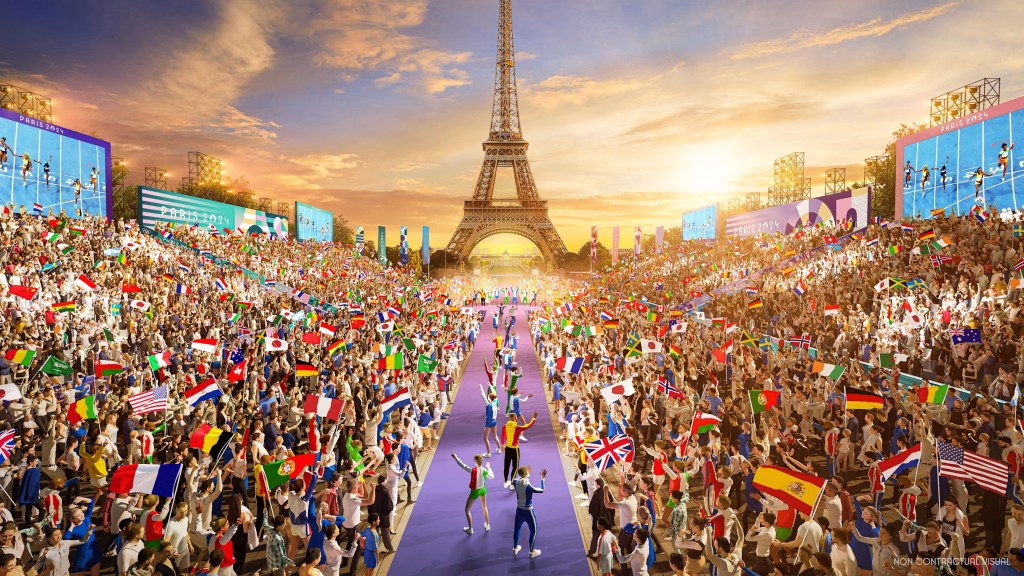
(Credit: Paris 2024)
The Olympic Games bring together the best of humanity, and offer hope for a better world.
Currently, the Summer Olympics are underway in Paris, France.
The beauty of the Olympics is their nature as a competition on the world’s stage. They have become a celebration of the best of the best competing to be known as the best in the world. There’s pomp and circumstance and ceremony that makes them special to watch and even more special to take part in.
The Olympics began in Ancient Greece, as a way for the various city-states to compete against each other in a show of their skills as men competed in various athletic disciplines. It had a political nature, being a way to show dominance over rival city-states without having to go to war. In fact, the games themselves were held under a truce to encourage this.
The 1800s saw the rebirth of the Olympic Games in Greece as a way to promote national unity after the Greek War of Independence from the Ottoman Empire. The International Olympic Committee (IOC) oversaw the 1896 games, which were the first iteration of the Olympic Games of today.
Originally, the Olympic Games were only open to amateurs, however, as time went on, the IOC permitted professional athletes to take part in the game. This allowed the Olympics to be a showcase for the world’s best athletes against one another. Winning an Olympic medal is a huge honor and a mark of extreme skill and overall excellence in one’s sport.
However, the Olympics’ greatest impact is to build bridges across the world.
Building Bridges
The Core of the Olympic Experience are the athletes themselves. One of the great functions of the Olympics is the ability to share cultures across the world with one another, and much of that happens because of the athletes’ presence both in their events and in the world.
It should come as no surprise that the Athletes become national heroes in their own right. They are symbols of their nations, which shows the beauty of the Olympics. As people from all over the world watch these athletes compete against each other, the global audience gets to see how alike these athletes from across the world are. In turn, this leads to a sense of familiarity in a world where “us and them” seems to be the default attitude. Then the naturally inquisitive nature of humans takes over, and they ask questions such as “why do some of the athletes wear colors that don’t make sense?” And in asking these questions, it invites people to dive deeper into other cultures, and learn about places which they wouldn’t have otherwise.
However, it’s important to remember that the Olympic Athletes are also ordinary humans. They use dating apps at the Olympic Village, reminding many people of their own experience being young and social in the internet age. They laugh, cry, and suffer from the same issues everyone else does. And they do so under immense pressure. Most normal people would crack under significantly less pressure, which adds another level to how inspirational these athletes can be. They perform at exceptional levels while their every actions are scrutinized. It’s hard not to feel the eyes of the world upon them when, indeed, the whole world is watching.
That global attention lends itself to the Olympics having much a bigger impact than merely connecting people with one another through sport.
The Global Chess Match
Part of the appeal of the Olympics is the global stage they give to important symbols and actions. When the whole world stops to watch one particular city where the best athletes from around the globe travel to compete, it causes the Olympics to become about much more than just sport. Despite the idea of the games being apolitical and separated from the normal complexity of international politics, most of the time, the exact opposite happens.
In 1936, Adolf Hitler’s Germany hosted the Olympics three years after taking power. The Nazis attempted to use their Olympic Games to show off how dramatically they had rebuilt Germany after the chaos of the Weimar Years and the pressures of the Treaty of Versailles in the wake of World War I. This was a way for the Nazi regime to show itself to the world, and project the image of Germany as a world power, a legitimate heir to the old German Empire’s ideals and then some, and a way to demonstrate the supremacy of its Aryan ideals. Jesse Owens, an African American runner, disabused those notions by winning four golds. Jesse Owens’ presence on the podium protested the Nazi ideals and the treatment he received in his own nation, and set the stage for many other athletes to follow in his wake.
While the Olympics never happened during World War II, they would become an important event during the Cold War. Throughout the latter half of the 20th Century, the Olympics were another avenue in the showdown between the United States and the Soviet Union. Communism vs. Capitalism wasn’t decided on the battlefield, it was settled on the track, the uneven bars, and the ice.
No other games exemplified what it meant for the US and USSR to face off than the 1980 Winter Olympics in Lake Placid, New York. The Miracle on Ice occurred when the United States beat the Soviet Union in ice hockey for the right to go to the gold medal round. The Soviet National team consisted of hardened hockey veterans who were four time defending gold champions. The United States team consisted of amateur players, and only a handful had experience in minor league hockey. The American team was expected to get clobbered, but in an astonishing feat, beat the Soviets 4-3, and would go on to win the gold medal against Finland a few days later. Beating the Soviet Union team at home, when they were expected to come in and handily crush the American team was a major cultural touchstone of the Cold War in America. The name “Miracle on Ice” came about from TV commentator Al Michaels’ question at the conclusion of the game, “Do you believe in miracles? YES!”
1980 would continue to be an important year in the Cold War in relation to the Olympics as the Summer Games in Moscow neared. In response to the Soviet invasion of Afghanistan the year prior, the United States led a 66 nation boycott of the Summer Games in Moscow. This was the first time the Soviet Union would host the Olympics, and the last time any member states of the former Soviet Union would host the games until Russia hosted the 2014 Winter Olympics in Sochi.
The 1980 games were given to both of the superpowers and the year was shaping up to be an important one in world history. As with all Olympic years before 1992, and Summer Olympic years from then onward, 1980 was a Presidential election year in the United States, between incumbent Jimmy Carter and Governor of California, Ronald Reagan. The boycott of the Moscow games was as much a domestic political gesture as it was a signal to the world at large that the wanton invasion of other countries was unacceptable to the United States. This action fit most with the spirit of the Olympics, though the United States would not bear these beliefs out in the decades afterwards.
The summer games in Moscow gave the USSR a chance to demonstrate the triumphs of communism on the world stage. Therefore, the United States-led boycott was a political slap in the face to the Soviet Union, especially since the USSR traveled to Lake Placid earlier in the year for the Winter Olympics. This used the Games themselves to make a symbolic statement, one which the United States would follow up with real action by arming the militant groups fighting the Soviets in Afghanistan within the next few years.
The 1972 Summer Olympics in Munich saw the darkest moment in Olympic history. The Munich Massacre was the first time terrorism was shown live on television across the world. The 1972 Munich games were a way for the German state (well, West German) to show that it was not the same Germany as it was when it hosted the Olympics in 1936. Several members of the Palestinian terror organization known as Black September chose these games to take several Israeli athletes as hostages in order to secure the release of Palestinian prisoners held by Israel. Israel refused and told the West German government that they were responsible for rescuing the hostages. The West German authorities botched multiple rescue attempts, and the Israeli athletes were killed by their captors. This event underlined the immense power of the Olympics, while spitting in the face of the Olympic Truce and the spirit of nonviolence which was supposed to preside over the competition. The events were a tragedy, but highlighted the plight of the Palestinian people in a way the world could not ignore, because the whole world was watching. The Munich Massacre highlighted the immense power of the Olympics as a platform and the precise reason why the competition deserves to be devoid of violence. They are about the best of humanity coming forth in the spirit of friendly competition.
The Olympic Truce is a concept which dates back to the games of Ancient Greece. In essence, it means that the nations competing in the Olympics will not engage in warfare against each other. It was observed so all of the countries of Ancient Greece could travel to the games, compete, and return home in safety. In the wake of the Cold War in 1992, the IOC decided to revive the tradition in concert with the United Nations. Every Olympics, the UN passes a resolution affirming the Truce.
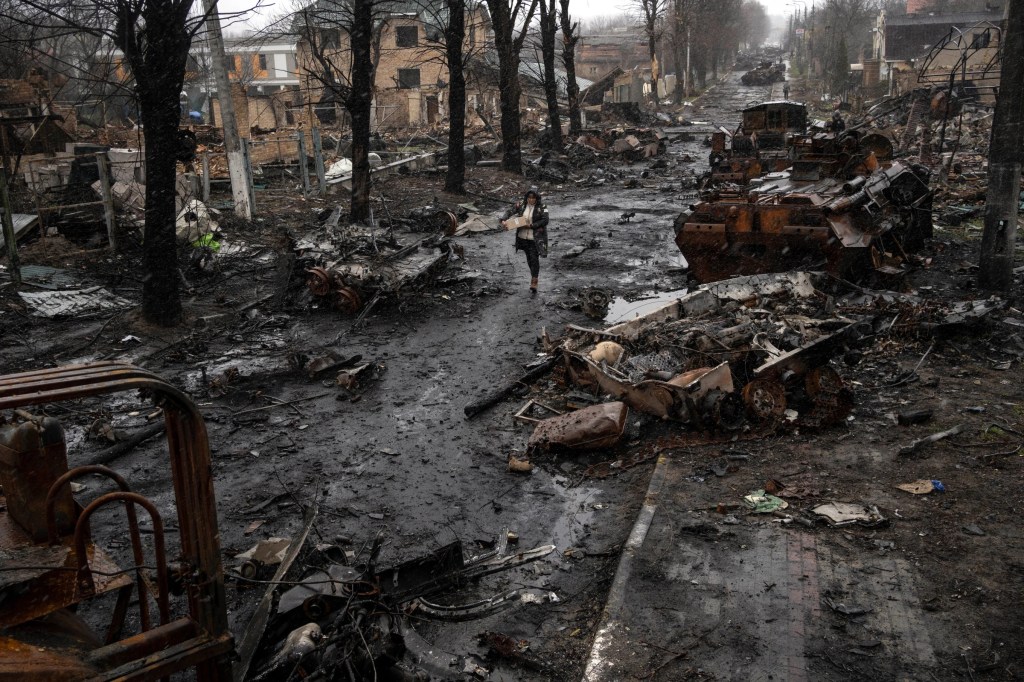
In 2022, Vladimir Putin’s Russia launched the full scale invasion of Ukraine on February 24th. This came after months of Russian troops massing near the Ukrainian border, Western intelligence reports of an impending invasion, and the conclusion of the Winter Olympics. The 2022 Winter Olympics were held in Beijing, China, between February 4th and the 20th. Breaking the Olympic Truce is worthy of international condemnation. It is one of the reasons why Russia’s invasion of Ukraine was delayed until after the closing ceremonies in Beijing in 2022.
In addition to multiple doping scandals, Russia was not permitted to send an official delegation to the 2024 Paris Olympics due to their war against Ukraine. Belarus, due to its close ties to Russia and support of the invasion, was also banned. A few athletes from both nations came to Paris to compete under a neutral flag, but any medals they receive do not count towards the overall records of Russia or Belarus, nor can their national symbols be displayed, such as the flag and national anthem at medal ceremonies.
Ukraine, on the other hand, has won multiple medals and these victories are symbolic for the nation as a whole. Besieged by a superior force, and suffering, the Ukrainian athletes represent their people on the world stage by standing up and saying, “We are here, and we shall not be overlooked!” These athletes and their glories are seen as inspiration to those fighting back home.
Despite the grim circumstances, the Ukrainians are this year’s representation of the importance of the Olympics on the international stage.
Why Still?
Many people feel as though the Olympics have had their day. The world is wracked with conflict, and focusing on an athletic contest while people starve and suffer seems pointless. In fact, it’s anything but.
Olympians become icons throughout the world, for both their feats of athleticism and who they are as people. Simone Biles is the most decorated Olympic gymnast of all time, and it probably wouldn’t be out of the question to believe many young girls from other nations were cheering her on when she competed because it’s fun to watch the best of the best do what they do for the world to see. More than that, how many children from other nations watched great athletes like Simone Biles, or Michael Phelps, or Usain Bolt compete while they were young, and said to themselves, “I want to be that person for my country when I get older.”
In times where it seems that mediocrity is celebrated above all else, and it’s quite simple to fail upwards, where many situations in life seem rightfully dire, the triumphs of Olympic athletes can offer a glimmer of hope, and an aspirational goal. They can help us believe that we are capable of achieving what we set our minds to. They give us people who exemplify what it means to push ourselves to reach beyond our limits and pick ourselves up when we fall.
Humans are naturally predisposed towards hope and winning against long odds. The first humans were able to thrive in a hostile world beset by natural predators and harsh environments. Humanity conquered the food chain by being smarter and more determined than the other creatures, not necessarily because humans were stronger or faster. Humanity tamed the land, conquered the seas, took flight, and eventually walked on the moon. When the challenge of the race to the moon was launched, there was no clear path. Much of the mathematics, strategy, and technology which would eventually land Apollo 11 on the lunar surface hadn’t even been invented yet. Nevertheless, humanity persevered. That boldness is why the Olympics are still relevant.
The Olympics, now more than ever, represent the hope of a world where conflict between nations is only found in the pool, on the track, or from atop bicycles rushing through the streets of whatever city hosts the games that particular year. The world is more interconnected than ever. It is easy to pay attention to what happens over there because we can see it over here.
The UN resolution for the Olympic Truce gains more support every time it is put forth. As the conflicts throughout the world grow more and more intense and gruesome, and poverty and inequality leech more from cultures around the globe, the people of the world and their governments both seem more overwhelmingly supportive of ideas which unite rather than divide. Despite the UN resolutions for the Truce being toothless, the Olympics still prove the efficacy of its ideals.
John F. Kennedy launched the space race with the words, “We go to the moon, and do the other things, not because they are easy, but because they are hard.”
Going to the Olympics is hard. Building a more perfect world is harder. Yet the fact that people still fight so hard to do the former, and the world still eagerly watches them do so prove that the latter is still a dream worth fighting for.





 Ark of the Lost Angels
Leave a comment