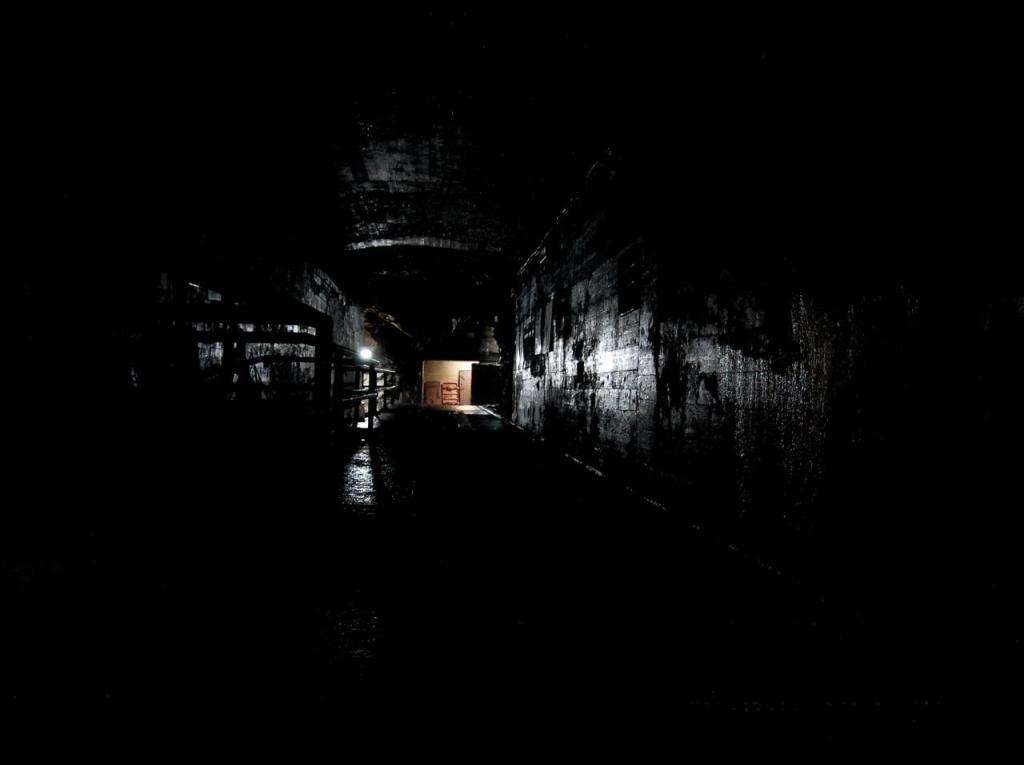
Project Riese (Credit: Lukas “DeViLtEcH”)
May 16th, 1945
Waldenburg, Germany
Vasily Borodin
3rd Shock Army
When we first heard rumors of the castle, all that was left was the march on Berlin. From the fighting in Stalingrad, across Eastern Europe, we stood on the fields of Germany and Poland ready to end the war. Field Marshal Zhukov had stopped our advance at the end of January. We sat and heard whispered rumors while we were camped in Silesia waiting for close to a month before we could take the last city at the heart of the fascist Reich. The cold was of no concern; we sustained ourselves on fury and the fires of revenge. But we would hear whispers of strange figures darting in and out of passages under the castle in Waldenburg. Eventually the order came down for us to move again, and we marched onwards across Germany as winter turned to spring.
Then we pushed into Berlin and planted the hammer and sickle above the Reichstag to end the war.
Many of my friends would never see their families again. None of us can escape the grip of the horrors we witnessed, or committed, those four long years. Even now they dwell in my nightmares and do not leave when I wake. The only thing that granted us any peace was that the fighting was over. Yet while the Americans continued their offensive against the Japanese in the Pacific and the great powers of Europe carved up Germany, we were marching in blissful ignorance towards the greatest of the horrors we would be subjected to.
Three days after Berlin was taken, my unit was withdrawn and tasked with occupying Waldenburg. Four hours after we arrived, a courier delivered sealed orders from Zhukov himself. My platoon was chosen to investigate reports of mysterious activity at Fürstenstein castle.
The castle itself remained untouched by the fighting, though the SS had left their mark. The grand old building was pilfered and new construction disrupted century old structures. Underneath the castle was a massive construction site. Tunnels ran deep into the mountain, and despite the Red Army’s occupation of the area, scouts had spotted figures roaming around nearby in the night. The first unit which was sent into the tunnel network never returned. Which is why my platoon was called upon.
Yuri Markhov was our commanding officer. A tough, seasoned, iron-willed veteran of many years, Markhov fought with the Red Army at the Battle of Tsaritsyn as a teenager during the Civil War. The changing of the city’s name and the evolution of its streets in the years since did nothing to diminish Markhov’s ability to move through it. When I was placed under his command during the Battle of Stalingrad, he led us through the city and the battle intact. Where many officers were cruel, Markhov was a father to us all and put the safety of his men above every other concern. He clashed with senior leadership on more than one occasion, but even the most fervent of political officers could never bring themselves to get rid of him.
Iskander Belinski was an engineering student before the war. He was conscripted when Leningrad fell under siege and hardened his heart and skills in the brutal fighting for three years. For his service, he was transferred to our unit and helped lead the push to Berlin. Logical, rational, and somewhat brutal, Belinski’s strategic planning was second to none, and his willingness to play out the cold calculus of combat saved us on many a harrowing day.
Viktor Chernov was my closest friend on the front. A fresh conscript who joined us on the road to Warsaw, his idealism amidst the stinking bodies and shattered souls sustained our entire unit. By the time the Soviet flag flew above the Reichstag, Chernov remained the humble, honest man he had been when he joined us, despite never being spared from intimately learning the cruel lessons of war.
Upon reading the orders, Markhov had drawn a cold scowl across his face. He had promised us, on assurances from more senior leaders, that our war was over. Bound by duty, honor, and the swift retribution of the Red Army, we descended into the tunnels. Twenty of us descended into the mountain beneath the castle through an elevator shaft within. Not all of us would return.
The passages near the surface were built with concrete. We entered those cavernous halls which echoed back every cough, every grunt, every footfall. Despite being relatively tight corridors, the fact that the earth swallowed us whole made the whole thing feel crushingly large. We came to a passage which was connected to the other pieces of the tunnel network underneath the castle. The walls were clean and in good repair, and the lights were working. The eeriness came from the simple fact that we found no clue as to why the Germans had bored into the ground this way. Nor was there any sign of our missing men.
The first intimation that something greater was at play was when a soldier from Minsk found a large passageway which had been blocked off by rubble. It was connected to the tunnels and obviously served the purpose to bring large equipment of some sort through. There was speculation that this was supposed to become one of Hitler’s headquarters, which would necessitate plenty of space within those tunnels.
Being buried so deep meant that this facility would have been safe from the bombing raids carried out daily by the Americans and the British. Though I quickly felt that safety was not the primary concern which guided the construction efforts. Belinksi mused that due to how deep these structures were buried, they could have been created to contain something rather than protect. As I stared at this passageway blocked with rubble and a makeshift barricade, I felt an overwhelming dread roll over me. The hairs on the back of my neck stood as though on parade in Red Square. Every instinct in my body, honed from years of brutal combat and thousands of Germans attempting to kill me was screaming that there was something behind the rock and dust which was better left undisturbed. Something dangerous. I was inclined to agree with Belinski’s assessment and felt that we were better off leaving while we still could. Still, we had orders and Markhov organized us into crews to start digging. It took half a day, with help from the garrison on the surface, but the passageway was uncovered. My dread grew greater when we uncovered the massive doors the rubble had been blocking. Thick, metal, secured with internal locking mechanisms and welded shut, we would need other equipment to enter, and the officers at the site agreed it was a problem which could wait until morning.
We returned to the surface to sleep, for it had been a long day of exploration, but the darkened passage we uncovered ran across my mind like shadows in the forest. Its truth continued slipping outside my understanding no matter how close I might have come in my contemplations, but it was the harbinger of something sinister which continued to unnerve me. Sleep did not come easily that night and what did never brought any rest with it. A great evil, greater than the other Nazi atrocities we had witnessed, was waiting for us through that door. I knew it in my bones.
When dawn broke, we gathered ourselves and our equipment and returned to the passageway. We forced open the giant metal doors and found ourselves confronted with the most spectacular and mortifying sights I had ever laid eyes on. Inside was not the makings of a headquarters for the Führer, but a massive laboratory. We found a much more cavernous space than we anticipated in the mountain underneath the castle, and indeed if Belinski’s calculations were correct, the elevator shafts we found around the outside edges of that first room coincided with sealed ones we had found in the castle above.
“I feel as though we are desecrating a grave,” Chernov mused. Though his voice was low, it felt massive in the icy silence of the tomb we walked in. Even the most hardened of us felt the same sense he put to words. The eyes of men who charged machine gun nests and flamethrowers with reckless abandon darted around the chamber as though the stones themselves would extract a violent and bloody price for daring to disturb this place.
Around the room were desks and filing cabinets that had been torn apart, with papers and documents scattered everywhere. When we had captured the castle, most of the sensitive information had been destroyed. The SS which had previously occupied this place did not want us to uncover anything about what they had been doing. We found the odd paper which had escaped a burn pit by slipping beneath a desk or table, and the occasional briefcase of important documents left in the haste of a desperate evacuation, but most of what we could read offered no clarity to the purpose of this place.
The same directives had not applied to the laboratory. The offices, while messy, were mostly intact. The papers and journals left behind by the scientists, researchers, and party officials told a far more sinister story than that of munitions factories and headquarters of last resort for the Führer. The tragedy of this facility was built with labor from the camps we found, and logs which we found by a shattered Nazi eagle which had fallen to the ground and been covered by a think layer of dust confirmed that thousands had been worked to death excavating this place starting as early as 1942.
Not all of them died during construction.
The official documentation referred to this as Project Black Storm. We had two or three German speakers within the unit, for various reasons. I was grateful for their presence throughout the war, but that had never come close to the gratitude I felt when reading over those papers. Based on their summaries, I was even more thankful I was not one of the ones doing the reading.
The story became more and more fantastical in a gruesome way. In 1943, when the German advance stalled and we began mounting a counteroffensive, the western Allies began landing in Sicily. Caught between two overwhelming forces, German High Command began looking into any possibility to bolster their own strength. Himmler himself ordered a unit of the SS to explore unconventional options. One of them was researching ways to raise the dead. Using research from Josef Mengele at Birkenau, Black Storm started its abominable research. Hundreds of those supposedly worked to death during construction were actually used as human test subjects for various methods of reanimation. It was barbaric. Even in death, the Reich’s victims could find no rest. I could not understand the science behind it, but some combination of diseases, chemicals, radiation, and electricity arrested or at the very least slowed decomposition. With the Allies closing in, Berlin pressured the project for more dramatic results. The SS sent some of their occult experts. The journals and research diaries did not mention whether it was the occult practices of Hitler’s fanatics, the adjustments to the scientific process, or a combination thereof which gave the project the breakthrough, but in late 1944, the dead walked again.
I remember a chilling statement one of our translators whose name has slipped my memory read. One of the scientists on the project had written up a condemnation of the entire program in his last diary entry. He seemed to be as much of an unwilling participant as the people on whom he was experimenting. He documented the rifts between conscripts like himself, the amoral men of science who wanted to accomplish this simply because they could, and the fanatics who saw their duty to a dying Reich was to wring more out of its loyal soldiers. He finished that entry with the sentence: ‘May God forgive us for what we have done.’
Those of us gathered to listen to the ghost stories laughed while a few others continued exploring the room. Markhov took a deep breath and became agitated the more we heard. I had only seen that particular emotion on him three times before. Once in Stalingrad, once in Seelow Heights outside Berlin, and the day he read our orders to come down here. I mirrored his feelings. As we heard more and more of the tales, the laughter stopped. Observations, experiments with behavior of the subjects, and preliminary planning on how best to deploy the Third Reich’s frightening new weapon smothered our laughter. Belinski dismissed it all as an elaborate hoax.
“Who would ever believe such things? The living dead? SS black magic? It’s preposterous. Farcical. It’s utter bullshit.”
“Then why did the Nazis take such great pains to bury this place and burn everything related to its work that was left outside?” Chernov, as usual, planted the most astute observation in the middle of the conversation. As the ramifications settled over us, and the translators continued reading, one of our comrades who elected to continue poking around opened a door on the far side of the room.
It sealed our fate.
The moment the door opened let loose a crowd of what remained. Stinking, rotting Nazi scientists, SS officers, and their victims swarmed the poor bastard who opened the door before any of us could react. I cannot recall his name, only the sound of his shrieking as they tore him to pieces and the look in his eye before it popped from his skull.
“Weapons!” Markhov called over the unnatural moans and growls of our unholy adversaries.
With our comrade dead, all that was left to unload everything we had on the horde. There was a stash of German weapons near one of the tunnel entrances. We had appropriated several of their submachine guns, since the MP 40s fared far better in the tight quarters of these tunnels than our Mosin-Nagant rifles. I was thankful for the weapons and excess of ammunition we pilfered. The offices which had been so icily devoid of sound quickly drowned out any thoughts or fears with the sound submachine guns and the screaming of my comrades – my friends – as they succumbed to the wave of rotting flesh. By the time we made it back through the metal doors and barricaded them shut once more, eleven of our initial twenty remained.
“What the fuck was that?” Belinski snapped as soon as we had a moment to catch our breath. His sentence was punctuated by the banging of the horde against those solid metal doors. Chernov and I shared a nervous look at each other followed by glancing at the doors.
“Will they hold?” Chernov asked, immediately addressing the most pressing of concerns.
Belinski slowed his breathing and calmed his tone. He looked at the doors for a moment. “They should. For a little while, not forever. We have to do something.”
I finally spoke for the first time all day. “Is there any way we can get help?”
“No,” Belinski stated sharply, “If we leave these doors unguarded and they break through, there is no telling where they could go. If they escape, this could cause much more dire consequences. Did those documents mention anything about this being something which could spread?”
“How would it spread?” I asked incredulously. The idea of rot and death being transmissible was laughable to me. We had seen our fair share of disease and pestilence during this wretched war, but fewer other ideas were as laughable as this one.
“I believe that Repin said something about a virus which was introduced to the process shortly before the success. Combined with a hypothesized chemical mutation inside the host when he was reading from one of those files,” Belinski gave his best recollection of the earlier readings.
“Where’s Repin?” I started looking for the comrade in question, intending on asking him if he remembered what he read any better.
“Eaten,” Belinski shot back bluntly.
“So we’re back where we began. I don’t think we can handle this without aid,” I growled. The banging on the doors was getting louder. Those things knew we were outside, and they hungered for us. At that moment, the thought crossed my mind that I wished to have died taking Berlin. My patience for the world had run out. The war was bad enough, but I wanted no part of what came after. Not if the new world looked like this.
“What if one of us were to leave?” Chernov suggested. “The remaining ten men would be strong enough to hold back.”
“That’s not a bad idea,” Markhov agreed with a wheeze and began to cough. I shared a look of concern with Belinski. The two of us had risen to be Markhov’s unofficial deputies, and the rest of our comrades took their cues from the way we behaved. We had survived the longest, so it stood to reason that we knew things they didn’t. I remain uncertain of how true that was, but back then, I kept those reservations to myself.
“I think Chernov should be the one to go,” Belinski stated, “He is the best of us, and if we are unsuccessful…” For the first time in months, emotion got the better of our resident rational thinker. “If we are unsuccessful, he will be put at a smaller risk.”
Belinski never talked about it, but I had sensed that he was the last of his family left in Leningrad when the siege was finally broken. He had nothing to go home to, but Chernov still regularly wrote to his mother, father, and sisters. His town was not marred by the war quite as dramatically as Belinski’s home. Or Markhov’s. Or mine.
“No,” Chernov refused sharply, “I will stand beside you, my brothers, as I have since I arrived. We faced the hells of Berlin together, so shall we face this one also.”
“Sir, you should go,” I turned to Markhov, “They will not believe any of us.”
Our commanding officer had never looked older than he did at that moment. Age, exhaustion, and a reluctance to leave his men all showed on his face. But the hunch in his stance and the slight tremor in his hand confirmed the silent concerns which Belinski and I had shared moments ago.
“I won’t go either,” Markhov remained defiant.
I shared another look with Belinski. I often served as the voice of reason, but I would pass those responsibilities off to him in situations where my more diplomatic tone would fall flat. Belinski picked up on my meaning, cleared his throat, and stated directly, “Sir, you are already tired. We need our fighting best down here if we are to hold them off long enough.
Markhov considered his words for a moment. He looked down at his filthy, blood and dust stained uniform, closed his eyes, and took a deep breath of the stale air which filled that infernal tomb.
“Borodin, you’re in charge.” Our commander was reluctant to say it, but the wave of relief which passed over all of us assured him it was the right decision. We all knew the risk we were taking by staying behind. We all knew that Markhov may have been the only man who could have told our story and not had it disappear behind the veil of the Kremlin, with any who whispered of it to be whisked off in the dark of the night by the NKVD. Markhov had the gravitas to ensure that the Soviet Union would never forget our sacrifices. Sparing him was the best restitution we could give for his own years of service and sacrifice.
“Sir, bring explosives back with you. I’ve reviewed my initial assessment of the room, and there is concern that the ventilation shafts could allow those creatures the chance to escape. They will have to be collapsed. We need to bury this hellish place again. There can be no risking it.”
Markhov nodded gravely. Then, I snapped off a salute to our commander before offering him a handshake. “In case you don’t make it back in time, it’s been an honor, sir.”
Markov raised his voice, turned to look at all of us, straightened his posture and spoke with vigor and purpose. “The honor was all mine, to fight along each and every one of you. I know not when we will meet again, but we will sing of our glories and drink to our sorrows once more. I have commanded many soldiers, but you all were the finest among them. Thank you, and good luck, my brothers.”
After one final rousing speech, our commanding officer turned and disappeared into the tunnels once more. All eyes then turned to me.
“Gentlemen, check your ammo, and make sure we are ready if anything should come through those doors,” I ordered. Everyone followed my commands without question, silently trading grave looks or offering secret prayers to the gods of their choosing. It was not my place to judge, and silently I hoped that whatever deities we could invoke might smile on us. I felt in that moment that we needed all the help we could get. Belinski explained his plans for the ventilation shafts and where best to place explosives once they returned. He wanted us to be prepared in case he fell.
“It is good that we leave nothing to chance,” Chernov agreed after a lengthy discussion.
Then the doors started buckling.
Ten men stood against the last necromantic tidal wave of the Third Reich. The doors gave way and the horde of creatures rushed towards us. I raised my appropriated German submachine gun and squeezed the trigger. And reloaded. And emptied the next magazine. And reloaded. And emptied the next magazine. And so on and so forth. One of my brothers fell to a lucky strike on his leg, which brought him to the ground for the horde to pounce. We avenged him swiftly. As their numbers thinned, Belinski was tackled to the ground. Chernov and I immediately tore the ghoul from him, pinned its arms with our boots, and emptied our weapons until what was a former SS officer turned into nothing more than a bloody pile of liquefied flesh.
What remained of our comrades finished off the last of the creatures. I dropped my weapon and tended to Belinski’s wounds. He had a deep gouge in his chest, and his hand was pressed to a wound on his neck which spurted blood through his fingers.
Chernov and I knew immediately he wouldn’t make it. We said as much with our eyes.
“Finish it,” Belinski begged of me. I froze, unsure if he meant to put him out of his pain or to destroy the rest of the monsters. As I turned his dying words over in my mind, I realized that he was still uncertain whether he would turn or not.
He was asking all of it from me. And I could not bring myself to grant his wish. We had come so far, fought so hard, for it all to end like this destroyed my ability to function. While I was frozen by inaction and emotion, Chernov drew his Tokarev and fired two rounds into Belinski’s head for good measure. Despite the holes in our friend’s forehead, he looked at peace.
He found the peace which would be denied to us.
Markhov returned with reinforcements, and we explored the rest of the laboratory. The door which our dead comrade unwittingly opened was the door to a containment area. A hallway of reinforced rooms with thick doors held pens of these monsters baying to be unleashed. One of the doors had been broken and it released the horde we faced. Crowds of these creatures clawed at thick glass, their only desire to feed on us. It was gruesome work to put them down, and we lost three more of the thirty men Markhov brought with him. We placed explosive charges on the ventilation shafts as Belinski instructed. We planted more on some of the tunnel passages, to cut off access. As far as we were concerned, the horrors deep beneath that castle should never be revealed to anyone. Our government would want to use this research, as would the Americans. We all agreed, as a collective that its power, and the potential for it to end the world, was too great to risk it falling into anyone’s hands. We would take responsibility for the world forgetting Project Black Storm, even if it meant our exile or execution.
“I need to feel the sun again,” I said to Chernov when we were finally officially relieved from our duties. To this day, I loathe being underground. Even after returning to Moscow, I cannot take its metro systems despite the bright beauty of its stations because they remind me too much of our ordeal in Waldenburg. If the Americans should launch their first strike against us, I will not go to the bomb shelters. I have glimpsed a world which no man should ever see, one which our generation’s war wrought. I have no desire to see the aftermath of the next war.
Thinking of that place still chills me to the core. Castles have retained a sinister air to me since that day. But nothing felt as cold as the last thing Chernov said to me before we made it to the surface. When he spoke, I knew that the man which had survived the war with his spirit intact would be buried along with that laboratory and the sick experiments it concealed. As if the war had not taken enough from us already.
“There is no sun which can make this world feel bright to a man who has witnessed what we have today.”
Hello all. After last year’s retelling of Frankenstein, I decided to keep with the World War II themed horror stories. This year’s installment is heavily inspired by the Call of Duty World at War Nazi Zombies mode which was itself had its foundation in the weird goings on of the freaky science and maniacal occultism of Nazi Germany. I opted to draw from the same mysterious happenings the game used in homage to the inspiration for this piece. I also decided to portray the Eastern Front this time around to prevent the setting from getting stale.
Project Riese (German for: “Giant”) was a construction project across Silesia in modern day Poland undertaken by the Nazi regime between 1943 and 1945. The project used slave labor from nearby concentration camps, working thousands of people to death. Its purpose was unknown, but speculation is that they were part of securing manufacturing facilities and constructing a headquarters for Adolf Hitler. They were never finished before the Soviets reached the area. Some of the tunnels remain intact today and can be visited on guided tours, though they tend to be more fiction than fact at this point. Sections of the tunnels have been collapsed, meaning whatever secrets the Nazis buried in the catacombs of Project Riese remain, now, a mystery.
The Fürstenstein Castle is now known as Książ Castle, and Waldenburg is now known as Wałbrzych. The German names for places were used simply for accuracy to its time. Silesia belongs to Poland currently, and I want to make it clear that this is in no way an endorsement of any claims that Germany should still own territory they controlled under the Nazi Regime or a subversive white supremacist dogwhistle that most of Europe rightfully belongs to Germany or anything of the sort. Just a recognition of where borders were in the past. I really wish we lived in a world where this didn’t need to be made explicit, but here we are.
Anyways, hope you enjoyed this year’s little foray into historical horror! Happy Halloween!



 Ark of the Lost Angels
Leave a comment