(Credit: Milano Cortina 2026)
Currently, the Winter Olympics are underway in Italy, across multiple different sites spread between Milan and Cortina d’Ampezzo.
The beauty of the Olympics is their nature as a competition on the world’s stage. They have become a celebration of the best of the best competing to be known as the best in the world. There’s pomp and circumstance and ceremony that makes them special to watch and even more special to take part in.
The Olympics began in Ancient Greece, as a way for the various city-states to compete against each other in a show of their skills as men competed in various athletic disciplines. It was politics and diplomacy: a way to show dominance over rival city-states without having to go to war. The games being a forum for competition between nations returned when the Olympics were rebirth in Greece in the 1800s. Originally a way to promote national unity after the Greek War of Independence from the Ottoman Empire, the formation of the International Olympic Committee (IOC) to oversee the 1896 games paved the way for the Olympic Games of today.
The Olympics evolved into the modern day showcase of professional athletes as the top of their respective games competing against each other. While there are politics and biases and all of the human shortcomings which follow the games and sometimes corrupt the judging process in various sports, the Olympics are a venue of competition with immense prestige like no other. Winning an Olympic medal is a huge honor and a mark of extreme skill and overall excellence in one’s sport.
Building Bridges
The Olympics present a unique opportunity to experience a snapshot of life in different places across the world. Presented to a global audience, the host nation gets the opportunity to showcase their country with all of its history, culture, and tradition to the entire world. What brings the Olympics home, past the spectacle and the pomp and circumstance is the athletes themselves. Every person competing is a person with a story, with hopes and dreams and interests and the Olympics is not only the great stage for their competitions, but also a chance to show themselves off as people.
On the other hand, these athletes become national heroes in their own right. They’re symbols, both of geopolitical rivalries but also the power of coming together in friendly competition. Crossing borders and language barriers and shaking hands can show everyone that it is possible to coexist and there is more than unites us than divides us.
In their own way, the Olympic athletes are ambassadors, and the Games are a diplomatic summit. These are all exceptional people competing in their respective disciplines as the top representatives of their countries. As people from all over the world watch these athletes compete against each other, the global audience gets to see how alike these athletes from across the world are. In turn, this leads to a sense of familiarity in a world where “us and them” seems to be the default attitude. Then the naturally inquisitive nature of humans takes over, and they ask questions such as “why do some of the athletes wear colors that don’t make sense?” And by asking these questions, it invites people to dive deeper into other cultures, and learn about places which they wouldn’t have otherwise.
None of this would have the same impact if the Olympians weren’t also ordinary people. The back and forth of the US Women’s Olympic Figure Skating team about the movies they watched (at an official event no less) feels like a group of friends going back and forth. Athletes use dating apps in Olympic villages. They’ve faced their own struggles from injuries to failed competitions to the loss of parents. By reaching the Olympics, they demonstrate persevering through adversity and achieving dreams and they do so under immense pressure. Most normal people would crack under significantly less pressure, which adds another level to how inspirational these athletes can be. They perform at exceptional levels while their every actions are scrutinized. It’s hard not to feel the eyes of the world upon them when, indeed, the whole world is watching. Being capable of competing at this level is the kind of inspiration the world needs more of. To celebrate champions, not just focus on the ills of the world. People need hope and inspiration, they need something to root for. Without anything good to root for, people lose hope and lose sight of the better world which has its promise at the heart of the Olympic Games.
That global attention lends itself to the Olympics having much a bigger impact than merely connecting people with one another through sport.
The World’s Stage
Part of the appeal of the Olympics is the global stage they give to important symbols and actions. When the whole world stops to look at one particular city where the best athletes from around the globe travel to compete, it causes the Olympics to become about much more than just sport. Despite the idea of the games being apolitical and separated from the normal complexity of international politics, most of the time, the exact opposite happens.
In 1936, Adolf Hitler’s Germany hosted the Olympics three years after taking power. The Nazis attempted to use their Olympic Games to show off how dramatically they had rebuilt Germany after the chaos of the Weimar Years and the pressures of the Treaty of Versailles in the wake of World War I. This was a way for the Nazi regime to show itself to the world, and project the image of Germany as a world power, a legitimate heir to the old German Empire, and the supremacy of its Aryan ideals. Jesse Owens, an African American runner, disabused those notions by winning four golds. Jesse Owens’ presence on the podium protested the Nazi ideals and the treatment he received in his own nation, and set the stage for many other athletes to follow in his wake.
While the Olympics never happened during World War II, they would become an important event during the Cold War as another avenue in the showdown between the United States and the Soviet Union. Communism vs. Capitalism wasn’t decided on the battlefield, it was settled on the track, the uneven bars, and the ice. No other games exemplified what it meant for the US and USSR to face off than the 1980 Winter Olympics in Lake Placid, New York. The Miracle on Ice occurred when the United States beat the Soviet Union in ice hockey for the right to go to the gold medal round. The Soviet National team consisted of hardened hockey veterans who were four time defending gold champions. The United States team consisted of amateur players, and only a handful had experience in minor league hockey. The American team was expected to get clobbered, but in an astonishing feat, beat the Soviets 4-3, and would go on to win the gold medal against Finland a few days later. Beating the Soviet Union team at home, when they were expected to come in and handily crush the American team was a major cultural touchstone of the Cold War in America. The name “Miracle on Ice” came about from TV commentator Al Michaels’ question at the conclusion of the game, “Do you believe in miracles? YES!”
How relevant is a Cold War symbolic victory against a regime which would collapse roughly twelve years later? It was an iconic moment in history for all involved. It represented the enduring and inspiring spirit at the heart of the Olympics. But the moment only became iconic because the whole world was watching. The Olympics officially declare themselves to be politically neutral, after all, they cannot arbitrate competition fairly if they openly take political sides. Despite this, the Olympics are a platform for people to make statements, especially advocating for peace and against war.
One of the central pillars of the Olympics is the Olympic Truce
The Olympic Truce in Times of Conflict
The Olympic Truce is a concept which dates back to the games of Ancient Greece. In essence, it means that the nations competing in the Olympics will not engage in warfare against each other. It was observed so all of the countries of Ancient Greece could travel to the games, compete, and return home in safety. In the wake of the Cold War in 1992, the IOC decided to revive the tradition in concert with the United Nations. Every Olympics, the UN passes a resolution affirming the Truce. The spirit of the Olympic Truce speaks to a wider call for peace, which was one of the central themes of the Milan-Cortina Games’ opening ceremonies. The ceremonies were an affirmation of the spirit of unity that so many people throughout the world feel is lacking.
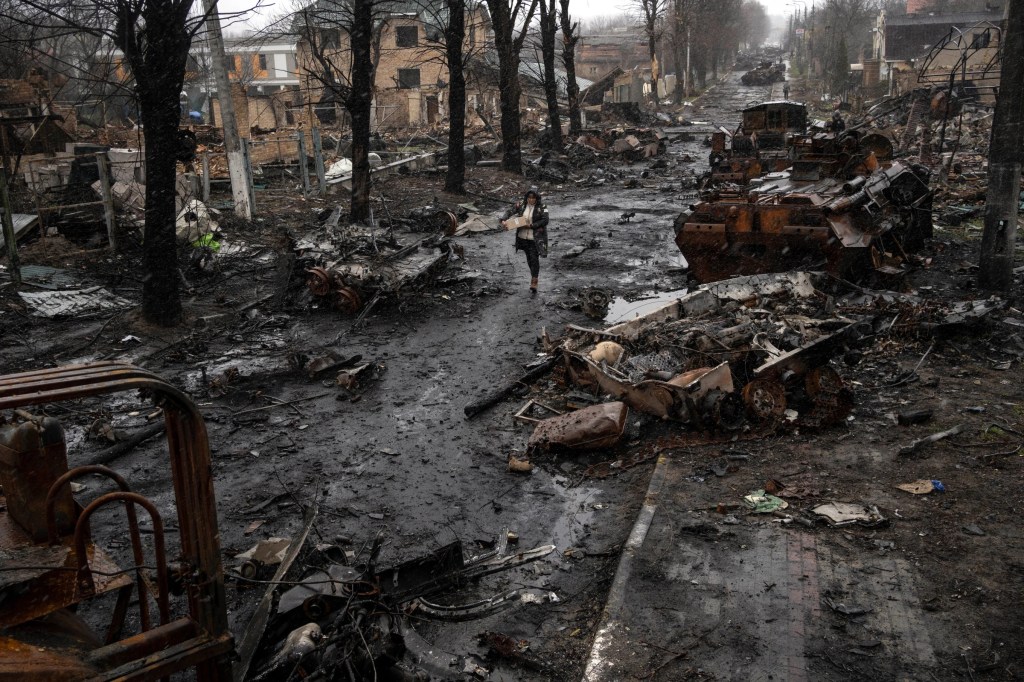
The 2022 Winter Olympics were held in Beijing, China, between February 4th and the 20th. Just four days later, on February 24th, 2022, Vladimir Putin’s Russia launched a full scale invasion of Ukraine. Western intelligence reported an impending invasion for months, citing Russian troop buildups near the Ukrainian border and other intelligence chatter. The specter of conflict hung over the previous winter games, but the Russian government waited until after the conclusion of the Winter Olympics to cross the border. This allowed them to sidestep the international condemnation of breaking the Olympic Truce.
In Paris, Ukraine won multiple medals which served as symbolic victories for the nation as a whole. Besieged by a superior force, and suffering, the Ukrainian athletes represented their people on the world stage by standing up and saying, “We are here, and we shall not be overlooked!” These athletes and their glories were seen as inspiration to those fighting back home. This year, almost two years later and almost exactly four years after the Russian invasion began, the IOC’s reception of Ukrainian statements has been far more muted. The war in Ukraine has become a normal fact of life for people both suffering in Ukraine and observing from afar.
In addition to multiple doping scandals, Russia was not permitted to send an official delegation to the 2024 Paris Olympics due to their war against Ukraine. Belarus, due to its close ties to Russia and support of the invasion, was also banned. A few athletes from both nations came to Paris to compete under a neutral flag, but any medals they received did not count towards the overall records of Russia or Belarus, nor can their national symbols be displayed, such as the flag and national anthem at medal ceremonies. The same is true of this Olympics. The Ukrainian government has voiced concern that the IOC may be softening its stance towards Russia. Ukrainian skeleton competitor Vladyslav Heraskevych was banned from competing due to his helmet honoring Ukrainian war dead. Many Ukrainians and international viewers condemned the IOC for the way they handled such a simple tribute. It is a hard line to balance, trying to avoid politicizing the games, but if the IOC has made the decision to ban Russia for their crimes, why should one man’s helmet remembering the victims of those crimes be so controversial? If a moral stance is made, why should it be softened because it’s ‘been long enough’ or some other weak justification?
While the Olympics represent the hope for a better world, the shortcomings of the games and their organizers can also remind us of the ways in which we can do better. Despite the grim circumstances, the Ukrainians continue to represent the importance of the Olympics on the international stage, both in competition and in what they do outside of it. Ukraine is not the only nation standing up to those terrorizing it. The United States’ current actions are a cause for alarm. Talks of annexing Greenland and Canada have given the athletes from those nations reason to show up against the American athletes. These games are about competition in athletics, but again, they are about so much more. American athletes have used the games as a platform to speak up for what they believe in, even if it’s against the direction their country is taking.
The Olympic Truce is a plea by the organizers to cease all wars during the games. It is not up to the IOC to be the facilitators of global peace, but with such a platform, it is absolutely within their power to do what they can to advance those ideals. If the spirit of fair competition is to be abided, then the moral stance of being in favor of peace must be similarly respected by the organizers, the competitors’ home nations, and the world at large.
The Olympics still have the ability to move people emotionally and make them think about the problems facing the world in new ways.
Should The Games Go On?
Many people feel as though the Olympics have had their day. The world is wracked with conflict, and focusing on an athletic contest while people starve and suffer seems pointless. However, the games remind us that there is a world out there worth fighting for. In turbulent and fractured times, the idea that everyone around the world is glued to their televisions or computer screens watching live coverage or keeping up with the medal counts, cheering on their favorite athletes is a universal experience. It is a communal one. In a world where conflict and division seems to be the norm, the idea that everyone can pay attention to the same thing, with the same people, and know that there are so many others across the world doing the same is some of the best bridge building we can hope for.
Olympians become icons throughout the world, for both their feats of athleticism and who they are as people. Simone Biles is the most decorated Olympic gymnast of all time, and it probably wouldn’t be out of the question to believe many young girls from other nations were cheering her on when she competed because it’s fun to watch the best of the best do what they do for the world to see. More than that, how many children from other nations watched great athletes like Simone Biles, or Michael Phelps, or Usain Bolt compete while they were young, and said to themselves, “I want to be that person for my country when I get older.” It doesn’t take much to believe that some of the athletes vying for gold today are there because they watched a specific athlete’s career as they won gold years ago. The triumphs of Olympic athletes offer a glimmer of hope and an aspirational goal. They can help us believe that we are capable of achieving what we set our minds to. They give us people who exemplify what it means to push ourselves to reach beyond our limits and pick ourselves up when we fall.
Humans are naturally predisposed towards hope and winning against long odds. The first humans were able to thrive in a hostile world beset by natural predators and harsh environments. Humanity conquered the food chain by being smarter and more determined than the other creatures, not necessarily because humans were stronger or faster. Humanity tamed the land, conquered the seas, took flight, and eventually walked on the moon. When the challenge of the race to the moon was launched, there was no clear path. Much of the mathematics, strategy, and technology which would eventually land Apollo 11 on the lunar surface hadn’t even been invented yet. Nevertheless, humanity persevered. Adversity was overcome, obstacles were eliminated, the goal was achieved. That boldness is why the Olympics are still relevant. They are a potent reminder of what we can do when we keep our eyes towards a greater prize.
The Olympics, now more than ever, represent the hope of a world where conflict between nations is only found on the ice, on the slopes, or on the snow. The world is more interconnected than ever. It is easy to pay attention to what happens over there because we can see it over here. In times where it seems that everyone is being pitted against each other, something in common can remind us that we all share this world, and that despite cultural differences which seem great, everyone truly isn’t all that different at their core. While conflicts throughout the world grow more intense and inequality harms more people everywhere around the globe, the people of the world seem to overwhelmingly support ideas which unite rather than divide.
The Olympics are still relevant because they remind us that the better tomorrow isn’t a fool’s errand in the slightest.




 Ark of the Lost Angels
Leave a comment