
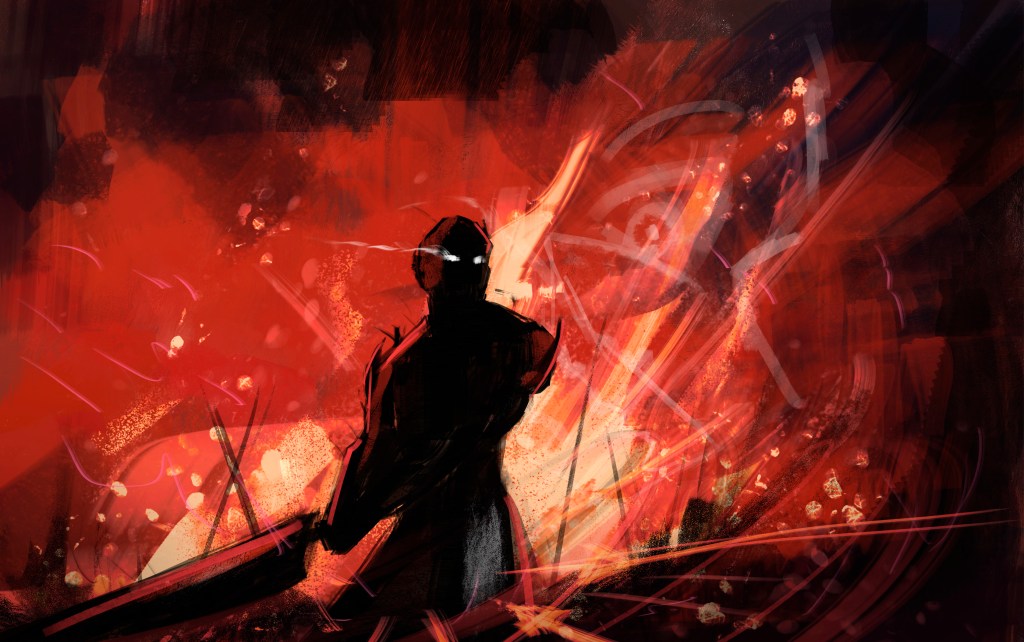
Vintage PC Workspace (Credit: dalay-lamma on DeviantArt)
Times have changed for the better, but the internet was superior in its younger years.
Humans have an affinity for the past. There is a constant nostalgia for childhood which permeates each generation. The 70s were nostalgic for the 50s, the 90s were nostalgic for the 70s, the 2000s were nostalgic for the 80s, and today’s society seems to romanticize the 2000s. Human society has consistently called whenever their childhood was the ‘best time ever’ and that everything has gone downhill in the years since. Most of this can be attributed to the person making such a claim as being nostalgic for childhood and the lack of pressures that goes along with it. Life sure was a lot more fun when deciding who to ask to homecoming or sit with at the lunch table were the most pressing concerns.
There’s something to be said about the nostalgia for the old internet though.
Recently, I cleaned up my file repository, and I found old exported bookmarks and other files I had pulled from various websites over the years. Sonic the Hedgehog was my introduction to gaming, and no matter how old I’ll get, true blue will always have a place in my heart. Searching some of these old files led me to an old Sonic fansite, which relaunched under a new name with a wider portfolio of focus.
In the same way, I was able to find Minecraft forum posts sharing maps and texture packs from late Alpha and early Beta builds of the game. It’s crazy to find these things so many years later, finding many dead links or deleted posts, but still some that are there. I first played Minecraft on December 24th, 2010, just four days after the game entered Beta version 1.0. I have played the game for so long that teenagers who have been playing it for years weren’t even born yet when I first logged on to the game.
The internet is living history in some ways, despite the old statement, “once it’s on the internet, it’s there forever” not quite being true anymore. Newgrounds existed as one of the great havens for Flash animation, but Adobe deprecated Flash in 2017 and it was entirely sunset in 2020. One of the biggest tools to build animation and websites for twenty years was no longer even supported by most browsers. A lot of what was on Newgrounds was lost. Old website hosting services shut down, and with them, the content they hosted. As internet protocols became more advanced for security and features, old websites started breaking. As browsers became more advanced, not every piece of legacy software used to build older websites was supported by the up-to-date browsers. So, while the websites might not be themselves broken, people’s only ways of viewing them became unable to communicate with these websites in a way that kept them viewable. Eventually it became seen as a detriment to put a ton of effort into running a website that may never get the attention that made it valuable.
As the world started building the current digital megalopolis, one company showed them the roads more traveled.
The Birth of the Digital Metropolis
Google’s success is one of the early internet’s hero stories, before their turn towards their much spottier current reputation. The company name became synonymous with searching something on the internet because they were one of the first companies to build a dedicated search engine in a revolutionary way. Google’s great innovation wasn’t finding websites; search engines had existed for years before the company’s founding. Rather, Google’s innovation was ranking the results of a query based on the websites’ qualities: how many pages a website had, and how many pages linked back to the main page. Instead of seeing the websites that mentioned the search terms the most, Google was showing users the most relevant websites of the highest quality.
Put another way, the internet today acts more like a city. The large social media sites serve as the downtown area, where people gather and communicate and give recommendations for where to go. Twitter, Facebook, TikTok, Reddit, Instagram, etc. all serve as the town center; a gathering place to build community and share information. Based on those conversations, some people may head to other parts of the metropolitan area for something more specialized via a robust public transit system. In other words, today’s internet has a few key services which provide links to more specific websites for news or commerce or entertainment. Furthermore, with the dawn of smartphones and the internet being more accessible than ever, the internet was no longer some place that must be sought out, it was a place which traveled with everyone.
Flash back to 1998, when Google was founded, and the internet was very decentralized. It was a requirement for users to know how to navigate to specific spaces on their own. If the internet of today is a city, the internet of the late 90s was a rural county: a large number of scattered small towns which were hard to navigate between without knowing exactly how. This is also the era before GPS, so MapQuest was the best bet for directions. It would be inexact and require strict adherence to the directions, but a user could still reach their destination. Google devised a service to fill a need: not only would they come up with a service that knew exactly what small town you needed to travel to in order to best fulfill your needs, they would take you right to that town as well in a fast and safe car. Over the years, Google identified the most common destinations, and ran rail lines to those places. To make money, they put advertisements on every train car, at every station, and on billboards all the way up and down every line. Eventually, companies began seeing where those rail lines intersected and started building what became the bustling downtown we know as the internet today.
The internet of today is missing the more specific nature it had before it became widespread. In the 2000s, the internet was popular enough to take off, and people began designing their own websites with the rudimentary tools and skills, or taking to platforms like MySpace and LiveJournal to showcase their personalities. These websites were the predecessors to modern social media. The internet at the time was primarily text-based, with a decent amount of flash content to add style and flair, if not to create games and animations like on the aforementioned Newgrounds. There was a great deal of customization of profiles on many of these proto-social media sites.
Burnie Burns, co-founder of Rooster Teeth said that it’s important for anyone creating on the internet to have their own space because you don’t want your entire operation dependent on someone else’s platform. This mentality stemmed from the days of the early internet as we know it. When Rooster Teeth first started in 2003, sharing video was difficult. The files had to be hosted and users would download them to watch using a separate application. YouTube first launched in 2005, but by then, Rooster Teeth had been maintaining its own site and built a dedicated viewer base which turned into a community with the launch of the forums and eventually the community site.
That was how most internet communities developed at that point. People would travel to websites for specific purposes, such as Slashdot or Ars Technica for technological news, or scores of various hobbyist websites. The internet was still a place someone went at this time period.
Around the time smartphones started hitting the market was when Facebook and Twitter were ascendent as the hot places to be on the internet. Social media sites existed before, but MySpace fell in popularity as trends often do. Facebook and Twitter became those centralized sites where people gathered to share news. Originally, it was all the people you connected with, and most people used them to share the boring minutiae of their day: a breakfast order or the idiot who cut them off in traffic or a funny anecdote about their kids, or sharing rumors and gossip from the schoolyard. But these websites were places people spent some of their time and logged off, as the internet always had been.
Then the iPhone changed the game. Suddenly the internet was in everyone’s pockets. No longer was it a place where you logged onto after work or school, checked your specific websites, and then logged off. Or where you had to upload files to DeviantArt or Flickr to share your artwork or photography. Facebook and Twitter had these hot new things called ‘Apps’ which were the only way to really reach these websites from your mobile device. One click opened up your sole source of news. You could share your text updates or pictures live as they unfolded. Suddenly everyone was connected all the time.
The internet in the 2000s was a bit of a different beast compared to what it morphed into. News aggregation sites like Reddit existed, but they were still more forum and community based. So many places on the internet were hyper-specific. Today, you go to YouTube can find everything from legacy media sharing the news to video game guides. In the 2000s, you had to visit CNN and the Washington Post and the Wall Street Journal and so on just to see what they all had to say. To get your game guides you had to go to GameFAQs and read what users had written down. GameFAQs is still up and running, and still uses text guides, which means all of the old ascii art that accompanied many of these guides is still in place.
Decentralization is crucial for a longstanding distributed network like the internet to continue existing. In an isolated system, entropy can only increase. The internet was better in the 2000s because there were fewer consolidated failure points the way there are now. A hypothetical: TikTok’s entire network of servers, data centers, and code base gets wiped out by a specifically targeted virus which wipes all data and destroys the infrastructure (which only really exists in the movies the you’re probably picturing, but roll with it). All of the legacy content is lost. The network of people using it as their only way of connecting with each other does not exist. People who put their careers into leveraging their following won’t be able to pay their bills. There is a massive disruption to the global digital ecosystem.
The flip side of that coin is the possibility for control. The current social media platforms are having their algorithms tweaked and tuned to provide content to every single user perfectly tailored to keep their attention on that particular app for long enough. They play with the attention spans of users to fire the brain in such a way that keeps people coming back for that next dopamine hit. Everyone has dealt with this, it’s perfectly natural, but it’s more important to know why this is happening.
However, the glory in the old internet didn’t just come from the apparatus, but by the content on it.
By The People, For the People
The internet in its modern form began as a way for universities and research institutions to talk to each other. The first major use of the internet was to share information, and that spirit was a driving force behind the early internet culture as well. Specialized spaces on the internet began cropping up for hobbies and such, but access was still quite limited. In the early 1990s, the majority of internet users were university students. Their access would be provisioned in September, at the start of the academic year. In that time, internet users would join, but were in the minority. Established rules and order in every forum or gathering place meant that newcomers would usually quietly observe before really diving in, so as to not be driven out with scorn and derision.
In 1993, internet service providers began offering anyone internet access, leading to a phenomenon known as Eternal September. This referred to the constant influx of new users to the internet, far outnumbering the existing users. With such a proportional increase, the idea that the newcomers will wait and observe got blown out the water. The influx of new users suddenly changed the digital landscape. The internet become democratized but it had yet to be monetized, and that’s where the sweet spot hit.
When people built fansites for movies or television shows or video games in the earlier days of the internet, they did it for the love of the game. The internet was not seen as a path to fame and glory, it was somewhere people could share information and communicate about common interests in a common place across great distances. But it was just that: a place. The lack of instantaneous access drew a very clear line between the real world and the digital one. The people who created things on the internet did so because they wanted to do it for themselves and likeminded people.
A component of that was the anonymity. In a past age, giving out details about your real identity on the internet was seen as certifiably insane. The anonymity gave people the freedom to be who they truly were, which came with as much good as it did evil. People were not judged for who they were, because they didn’t have to share anything about their real selves, which meant so much more credence was paid to what was being created and not who was creating it. On the flip side, many people reveled in the “impenetrable” masks they wore and allowed the edgy sexist, racist, homophobic jokes to flow with reckless abandon. There was no accountability.
That gave the internet the freedom to be free.
With great freedom gave people the ability to do whatever the hell they wanted. People would post digital pictures to sites like DeviantArt of their friend or their neighborhoods. Without as many “hot tips and tricks” in the wild, there was a certain amateur feeling to what was out there that reinforced the feeling that this was a space by people and for people. The most popular YouTube videos after the site’s launch in 2005 were innocuous videos like “David after the dentist”, or “Charlie bit my finger” and would continue as years rolled on with videos like “Double Rainbow.”
These videos are a small sample of the kinds of innocuous videos which became famous and shared because they were human, simple, relatable, and humorous. With a smaller subset of the population on the internet, there was less content, and items such as these and others saw massive circulation which did not persist as the internet grew more populated. Now there is so much out there that it is impossible to have the same virality that people now try to engineer.
The early internet was beautiful because it was natural. People shared information and resources even while enabling brutal trolls. There was no goal other than to create and share because monetizing these things was not the primary focus. As more technology companies like Facebook began centralizing more of the traffic and requiring more resources to run their endeavors, the need for monetization became paramount. When other companies saw how much money that first wave of companies were making, they began signing on. The internet shifted to a profit-based place.
Then it got put in everyone’s pockets.
The Pocket Computing Revolution
The lines between reality and internet became almost nonexistent by the time the iPhone 4 came out in 2010. No longer bound to AT&T as a carrier, able to handle data for internet browsing, and having set the standard for what phones should look like, act like, and be capable of, Apple’s mobile device become ubiquitous meant that everyone wanted one. Everyone hooked themselves into the net from their pocket. What previously took weeks to make the rounds now did it in days. Twitter’s upgrades meant that the world got to see what was trending as soon as people started talking about it. The information started traveling so fast that there was never any time to check to see if it was right.
Memes changed. The old school generation of memes like Scumbag Steve, Rageguy, or Advice Animals made the rounds for years. They were predictable, but a familiar shorthand for many on the internet to use, often making the rounds in forum-based websites like Reddit or 4Chan. The subcultures that developed these things grew them into their own language and way of communicating, but they still trickled out. In today’s internet, a meme that picks up steam by the 3rd of the month might be played out by the 27th. People interact with the internet more, they see these things more, they get tired of them more.
The demand for more constantly enabled by the internet being constantly available pushed the old internet mentality into its grave. No longer is the internet an avenue for entertainment, but the avenue for entertainment. Communication on the internet used to be limited to text-based communications before voice-over-IP and then video chatting technology became widespread enough. Because the internet used to have stricter boundaries with the real world, connecting with people on Usenet groups, IRC rooms, in the comments of websites, etc. was commonplace. But those were still just the “online” friends. Real people were met in bars, at sports games, school, work, social events, recreational sports, etc. The old internet was more respected because it has its place but it wasn’t the only place. In today’s age, where the third places have all been shuttered due to lack of profitability, the internet has become the cornerstone of people’s social lives to the point where they do not know how to communicate without it.
On the old internet, less was more. The lack of such widespread and constant usage meant that what people did put up was more likely to reach a larger audience. The inability to monetize most of it meant that people could do what they want to without having to worry about how it would put food on the table. People could spend more of their time online in their sectors, following what they wanted to, instead of chasing trends to monetize and grow an ever elusive audience.
The glory of the old internet was its authenticity, its earnestness, and its exclusivity. People put themselves out there for the love of doing what they did, whether it was model trains, photography, Star Trek, music, or anything else under the sun. Reddit user Own_willingness3670 said, “The old internet felt like exploring a neighborhood where every house was completely different. Someone’s GeoCities page about their hamster right next to a fan site for a band that only had two songs. Every page had a visitor counter at the bottom stuck at like 47. I miss AIM away messages most though. The amount of emotional energy I put into picking the perfect song lyric for my away message so a specific person might see it and somehow decode my feelings was genuinely unhinged. And we all had that one friend who changed their away message like eight times a day. Now everything online looks the same and the internet feels more like a mall than a neighborhood.”
Right now, a staggering amount of content and engagement are AI and bot creations. As the push for monetization became greater and greater, the homogenization of the internet grew more and more intense. Business owners like clean interfaces and similar methods of retaining attention. No longer is it a distributed network about the artistry and passion, but a multi-hundred-billion-dollar industry.
The old internet showed us what the internet could be. A free exchange of information, a way to honestly connect with others and share interests while giving everyone a glimpse into who you were. The spirit of free information and free expression is still there, and the ground does not have to be ceded to the corporations trying to make money off of everyone. The internet does not need the powers that be setting the terms for everyone.
There is enough room on the internet for everyone to carve out a little space for yourself.






Leave a comment